


Ala Younis / Ali Eyal
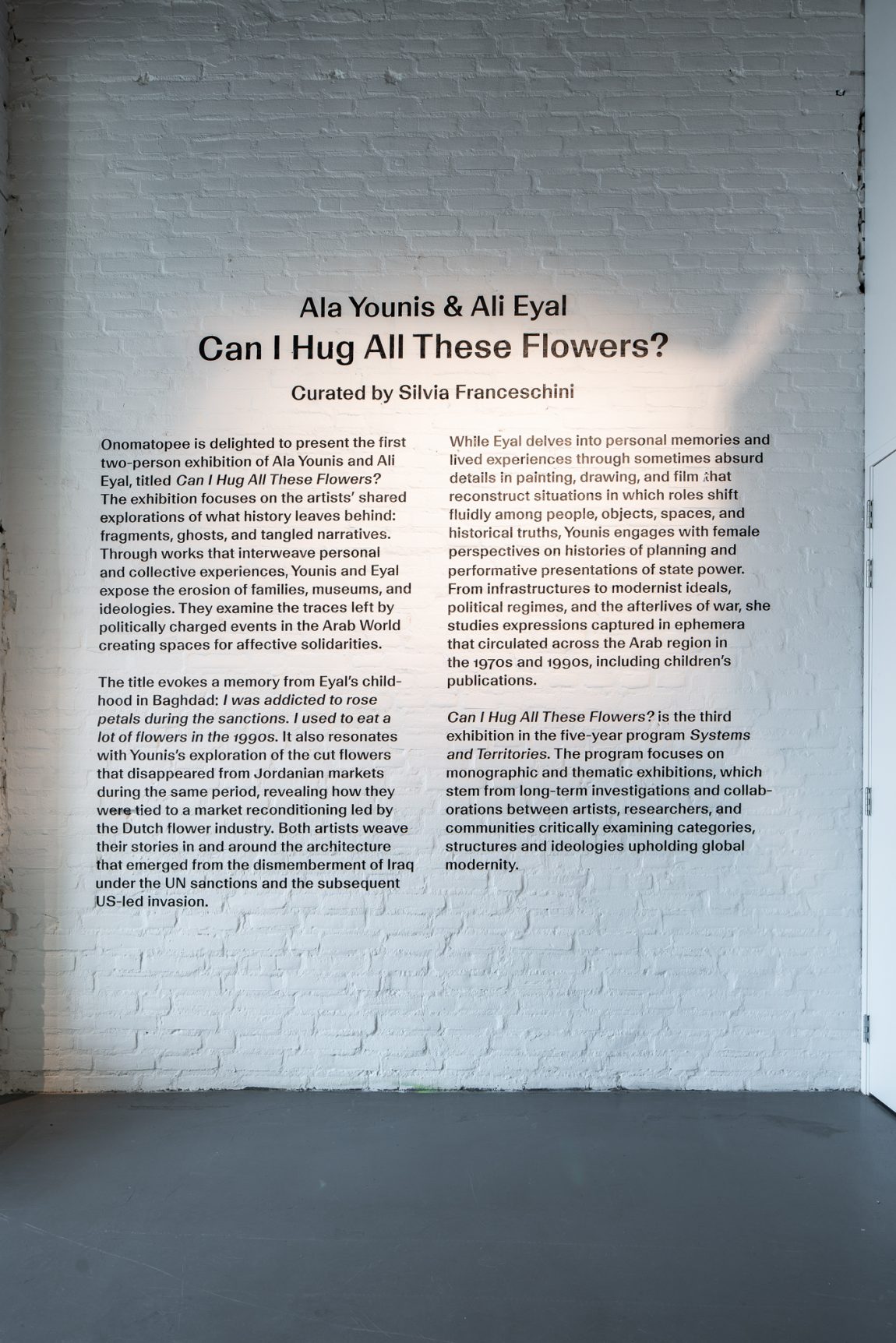
Can I Hug All These Flowers?
Curated by Silvia Franceschini
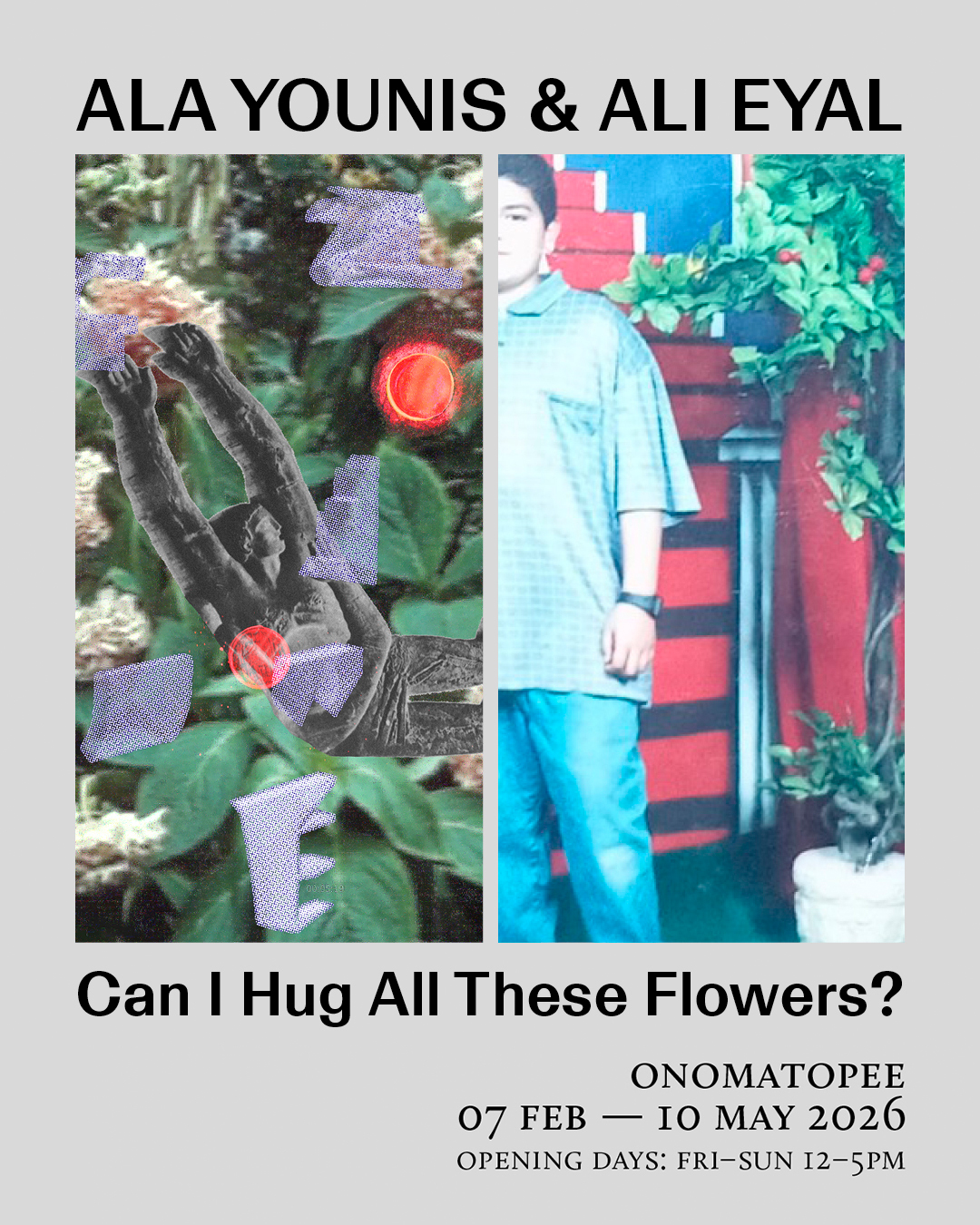
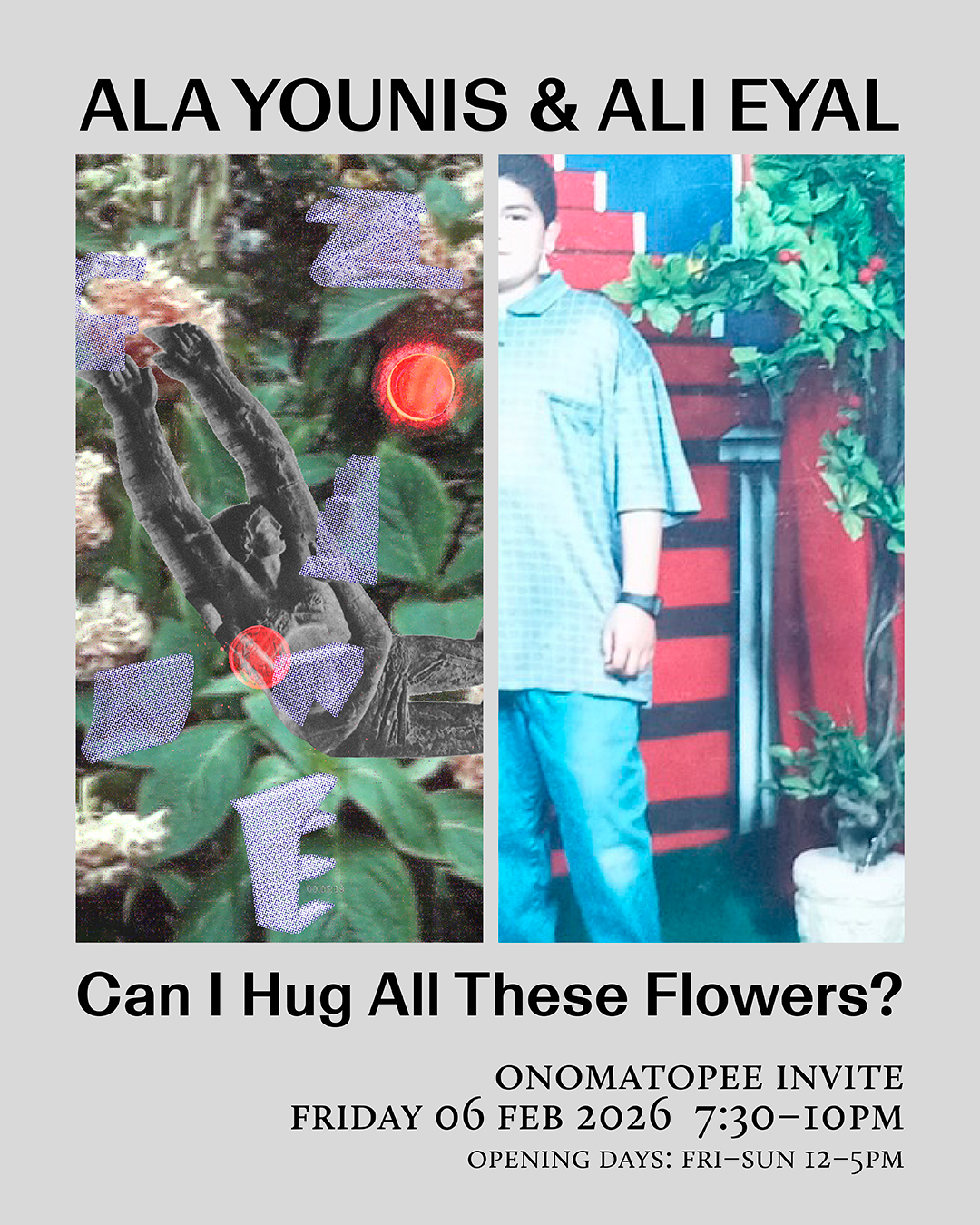
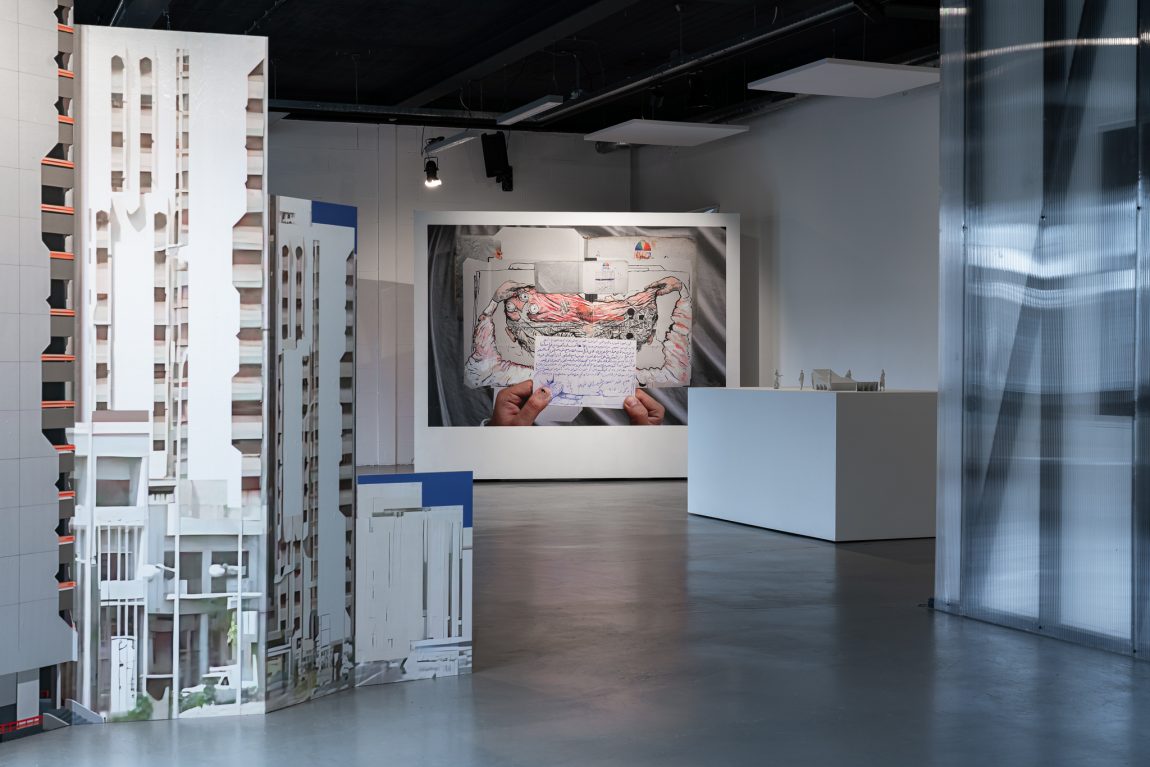
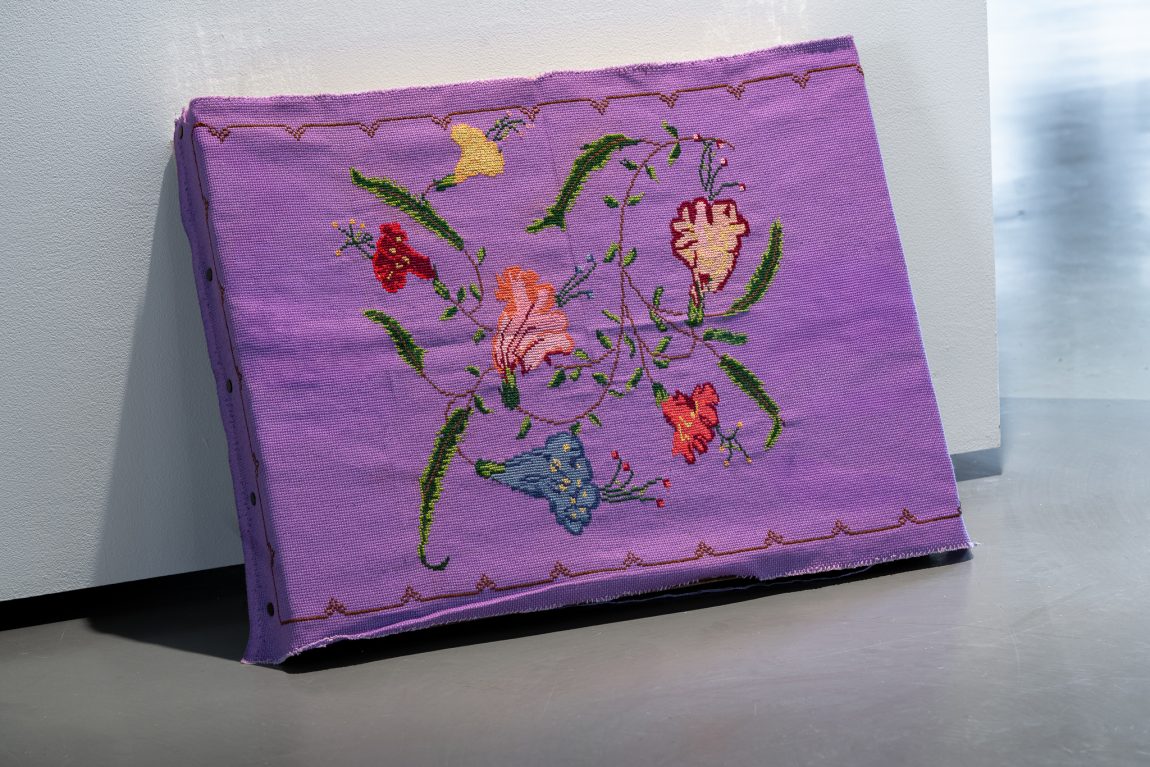
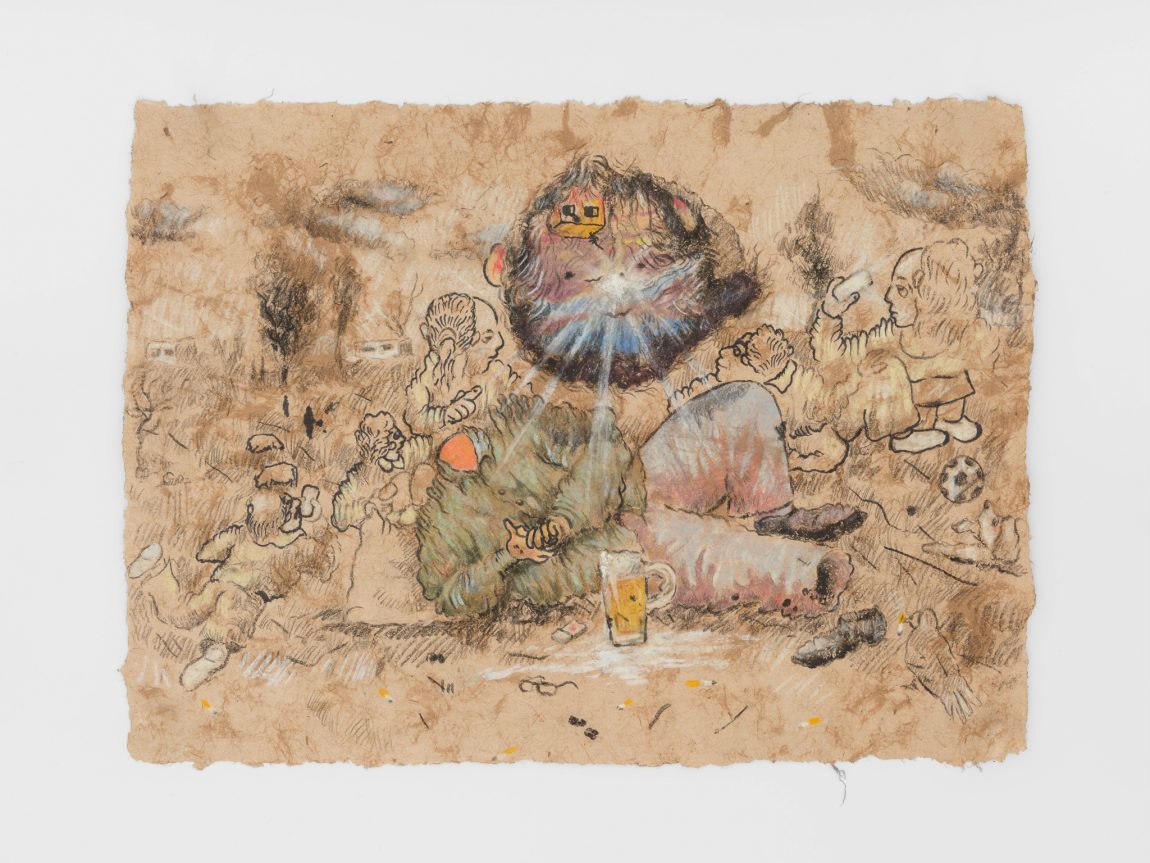
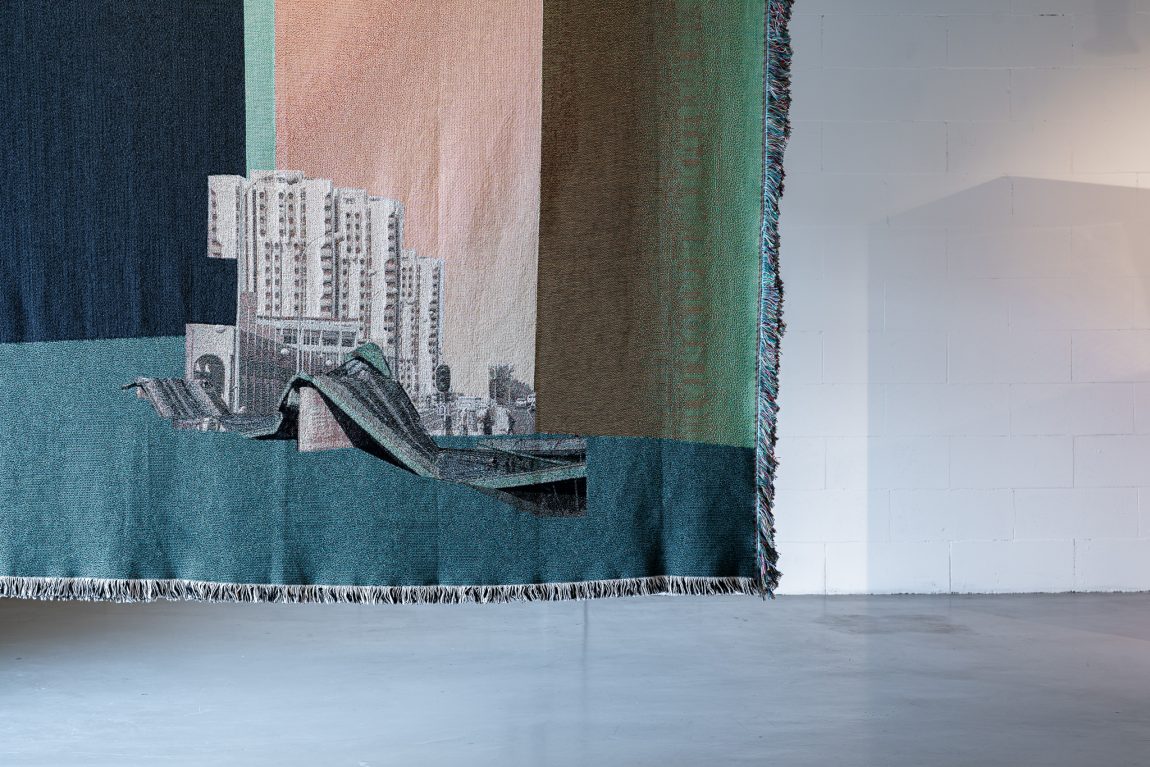
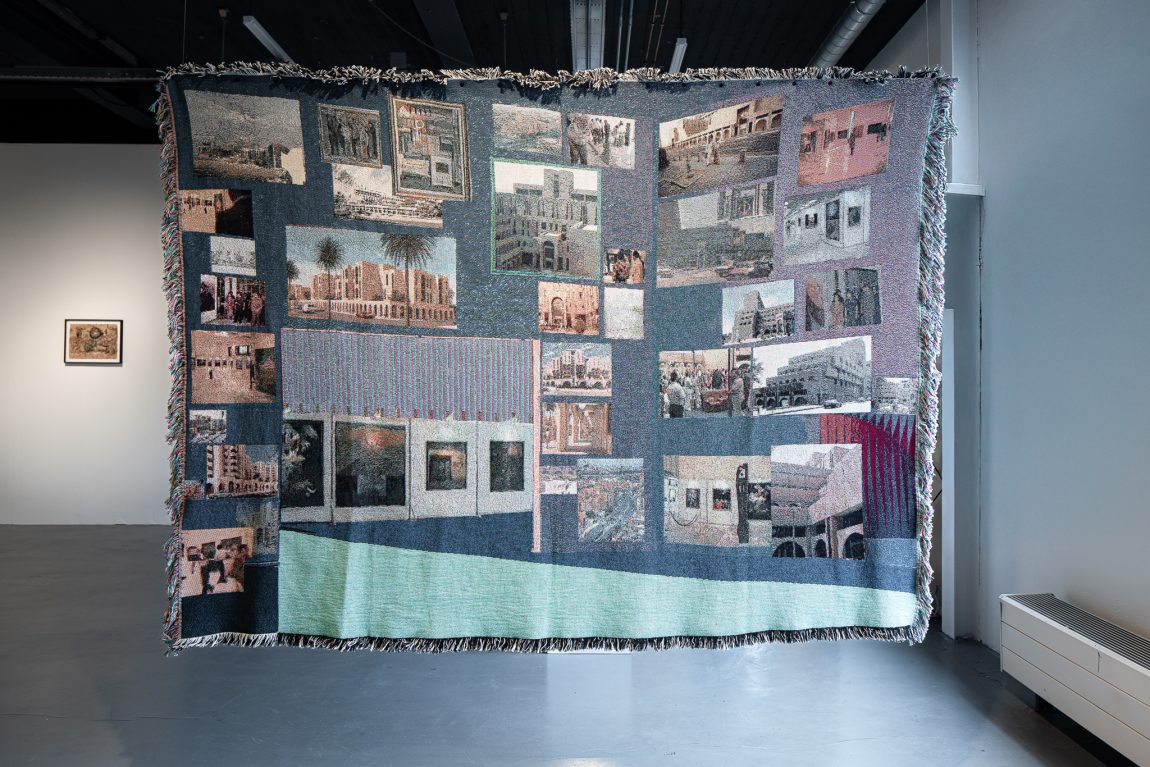
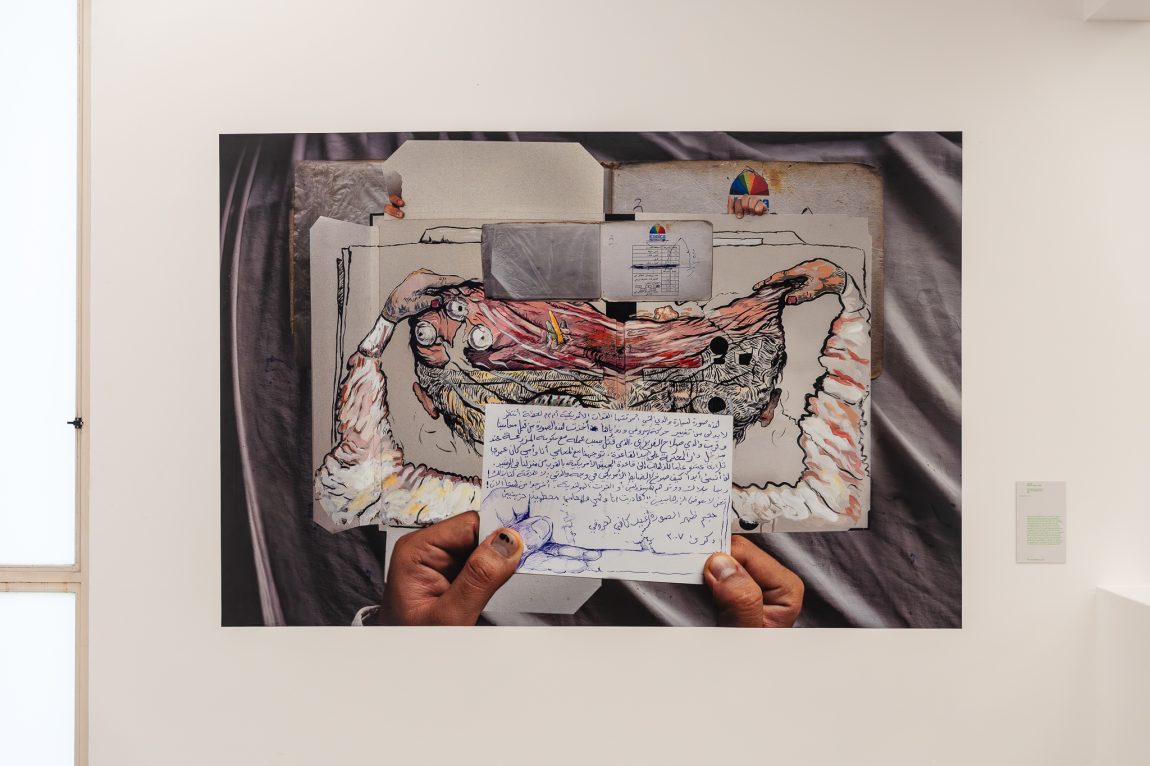
Onomatopee is delighted to present the first two-person exhibition of Ala Younis and Ali Eyal, titled “Can I Hug All These Flowers?” The exhibition focuses on the artists’ shared explorations of what history leaves behind: fragments, ghosts, and tangled narratives. Through works that interweave personal and collective experiences, Younis and Eyal expose the erosion of families, museums, and ideologies. They examine the traces left by the politically charged events in the Arab World, creating spaces for affective solidarities.
The title evokes a memory from Eyal’s childhood in Baghdad: “I was addicted to rose petals during the sanctions. I used to eat a lot of flowers in the 1990s.” It also resonates with Younis’s exploration of the cut flowers that disappeared from Jordanian markets during the same period, revealing how they were tied to a market reconditioning led by the Dutch flower industry. Both artists weave their stories in and around the architecture that emerged from the dismemberment of Iraq under the UN sanctions and the subsequent US-led invasion.
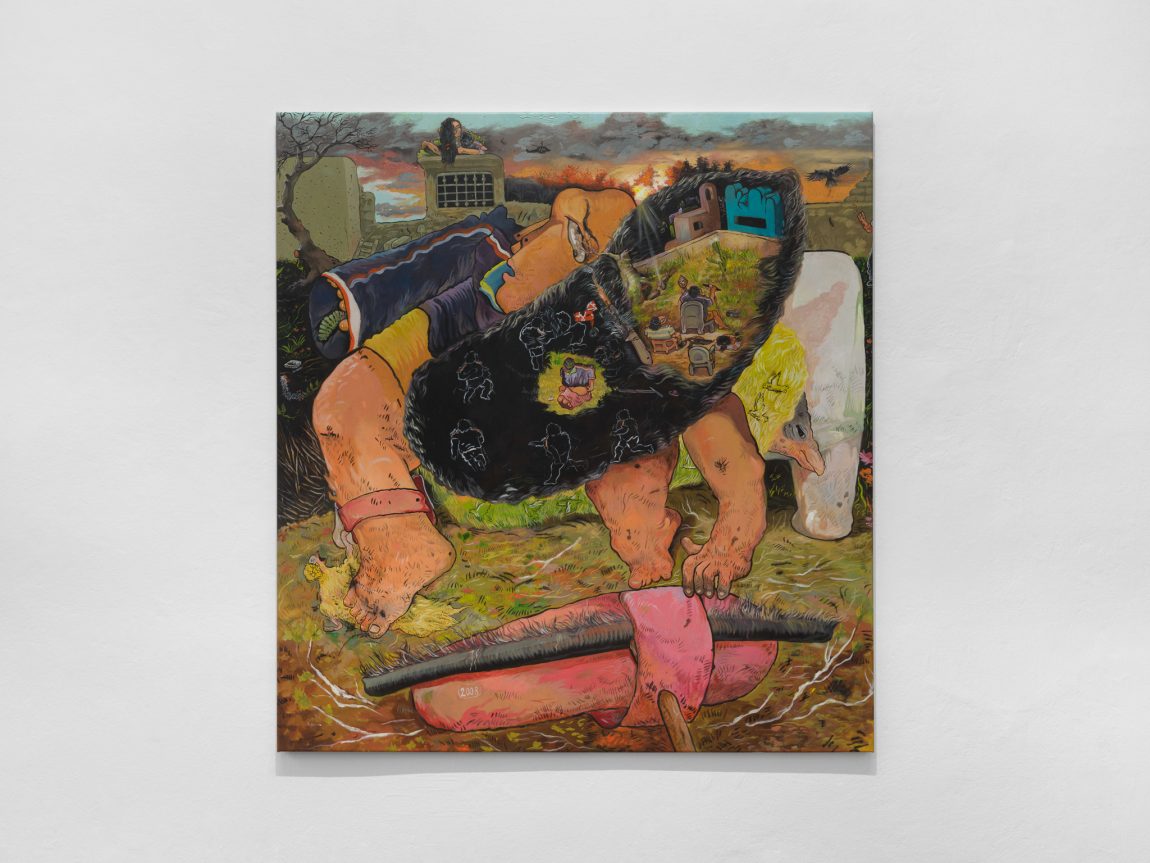
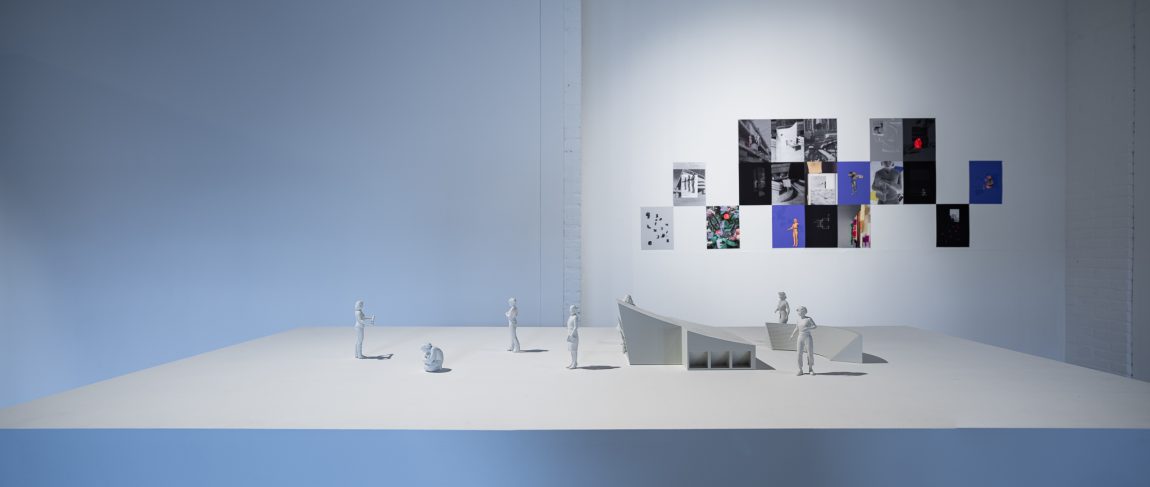
While Eyal delves into personal memories and lived experiences through sometimes absurd details in painting, drawing, and film that reconstruct situations in which roles shift fluidly among people, objects, spaces, and historical truths, Younis engages with female perspectives on histories of planning and performative presentations of state power. From infrastructures to modernist ideals, political regimes, and the afterlives of war, she studies expressions captured in ephemera that circulated across the Arab region in the 1970s and 1990s, including children’s publications.
Can I Hug All These Flowers? is the third exhibition in the five-year program Systems and Territories. The program focuses on monographic and thematic exhibitions, which stem from long-term investigations and collaborations between artists, researchers, and communities critically examining categories, structures and ideologies upholding global modernity.
General opening hours
February 7–May 10, 2026
Open every Friday, Saturday and Sunday between 12-5 PM
At Onomatopee
Exhibition opening
Friday, February 6, 2026
7:30–10 PM (doors open 7 PM)
Free entrance + free drink
At Onomatopee
About the artists
Ala Younis is a visual artist, and curator, based in Amman, Jordan. Her archival installations, textiles, drawings, and books forge subtle yet startling connections across political, social, urban, and popular imaginaries. Informed by her training in architecture and visual cultures, Younis’s projects focus on the physical transformations and narrative intersections of the Arab geographies in which she grew up. Her work embraces multiple protagonists and histories, countering dominant storylines. Across her investigations, oil politics, war, heritage, modernism, nationalism, and internationalism intersect.
Younis’ has participated in the biennials of Diriyah, Dhaka, Istanbul, Venice, Gwangju, Ural, Orléans, Ljubljana, Kaunas, Sharjah, and the Islamic Arts in Jeddah, as well as the New Museum Triennial: The Ungovernables (2012, New York). She curated Kuwait’s first pavilion at the Venice Biennale (2013), served as co-Head of Berlinale’s Forum Expanded (2021-2024), co-Artistic Director of Singapore Biennale 2022, Artistic Director of the Academy of the Arts of the World in Cologne (2023-2025), and a recent research scholar at al Mawrid Arab Center for the Study of Art, at New York University Abu Dhabi.
She co-founded the independent publishing initiative, Kayfa ta, which researches and publishes on and through independent endeavors. Younis holds a BSc. in Architecture from the University of Jordan (1997), MRes in Visual Cultures from Goldsmiths, University of London (2016), and is currently reading for a DPhil in Fine Art at the Ruskin School of Art, University of Oxford.
Ali Eyal is an interdisciplinary visual artist based in Los Angeles. His practice spans drawing, painting, assemblage, and film and employs imagination and storytelling to denounce the hardships posed by war and occupation. Tapping into the power of fiction, he crafts narratives depicting characters striving to overcome the challenges of their land, serving as allegories for resistance. Eyal weaves together elusive fragments and shards—personal memories, dreams, nightmares—assembling them in a disfigured whole which becomes a commentary on the impossibility of (coherent) narrative in the face of ongoing chaos and destruction.
Eyal is part of the Whitney Biennial 2026, New York. His recent solo exhibitions include Let Them Say Something, ChertLüdde, Berlin (2025) Leaving My Eyelids Behind, Visible Records (2024); In the Head’s Sunrise, Brief Histories (2023); In the Head’s Dusk, SAW Gallery (2023). His group exhibitions include: the 14th Mercosul Biennial (2025), the 18th Istanbul Biennial (2025) Hammer Museum, Los Angeles (2025); Thinking Historically in the Present, Sharjah Biennial 15 (2023); Is It Morning for You Yet?, 58th Carnegie International (2023); Surviving the Long Wars: Reckon and Reimagine, Chicago Cultural Center (2023); documenta 15, Kassel (2022); Theater of Operations: The Gulf Wars 1991-2011, MoMA PS1 (2020). Eyal studied at the Institute of Fine Arts in Baghdad (2015), was resident at the Rijksakademie van beeldende kunsten, Amsterdam (2020) and Home Workspace Independent Study Program, Ashkal Alwan, Beirut (2016-17).